Contact Us

We offer both in person services based in Mission Valley as well as telehealth services via video-conferencing platforms to patients located in California.

We do not accept walk-ins. You must contact our Clinic Coordinator at 858-354-4077 or info@csamsandiego.com before visiting us on site.

CONTACT US

IF YOU WOULD LIKE TO INQUIRE ABOUT TREATMENT AT CSAM, PLEASE FILL OUT THE FORM AND A THERAPIST WILL CONTACT YOU TO MAKE AN APPOINTMENT.

You may also contact us via phone or email:

Phone: 858-354-4077

Email: info@csamsandiego.com

7860 Mission Center Ct, Suite 209
San Diego, CA, 92108

858.354.4077

At The Center for Stress and Anxiety Management, our psychologists have years of experience. Unlike many other providers, our clinicians truly specialize in the diagnosis and treatment of anxiety and related problems. Our mission is to apply only the most effective short-term psychological treatments supported by extensive scientific research. We are located in Rancho Bernardo, Carlsbad, and Mission Valley.

full banner.jpg

Blog

Read our award-winning blogs for useful information and tips about anxiety, stress, and related disorders.


En(Joy)ing the Holidays

Jill Stoddard


Written by Lauren Helm, M.A.

When the holidays are here, there can be great potential for joy, but also, great potential for stress. The holidays may entail numerous stressors, including a significant change in routine, exposure to large crowds of people while shopping, financial strain, feeling under pressure from expectations of others or yourself, and relationship stress or conflict. However, there are many ways that we can take care of ourselves in order to connect with the potential for rich, fulfilling experiences with loved ones while we celebrate during the holidays.


  • Clarify what you value

    • Instead of going through the motions while participating in holiday celebrations, take some time to reflect upon what it is that you find most meaningful about these times. What is truly most important to you? What experience would you like to actively participate in creating? If you can allow your values to guide your actions during holiday activities, you may find that the quality of your experiences deepen.

  • Practice emotional awareness

    • It’s not always easy, but checking in for a moment and tuning into your emotions can help to give you additional information about how you are responding to potential holiday stressors. Take a slow, deep breath and pay attention, nonjudgmentally, to your feelings as they arise. If you allow them to come and go without reflexively reacting, you can consciously decide to act in the most effective manner in a given situation. Mindfulness can be particularly helpful for practicing a healthy way of relating to your emotions. Free mindfulness meditations and exercises can be found here

  • Adopt a flexible attitude

    • Keep in mind that change is constant. Change can be very stressful, but new experiences can also provide excitement and enrichment to your life. Change offers many opportunities for growth – our response to change may determine whether we get “stuck” in fighting with the change of routine that occurs during the holidays, or whether we can be flexible and allow change without resistance – we may even find that we enjoy the ride!

  • Maintain a healthy, balanced routine

    • Even though your schedule may be different than usual, commit to creating balance in whatever ways are possible and supportive for you during this time. That might mean making regular sleep a priority, making healthy food choices, and continuing to engage in exercise. Avoid overscheduling yourself during this time, and ask for help from others if needed.

  • Practice compassion for others and self-compassion

    • Compassion for others and self-compassion can enhance any experience that we have, and help us to let go of unhelpful expectations of ourselves or others. We are all human and imperfect. Choosing to practice compassion towards family and friends may reduce tension and stress during the holidays. Your relationship with yourself also will greatly affect your experience of the moment. Think of practicing compassion towards yourself as a great holiday gift that you can give yourself, over and over again. Learn more about self-compassion here.

  • Remember gratitude

    • Gratitude is one of the biggest predictors of happiness. It may be easy to get swept away in our “wants” and feeling that we are lacking something. Gratitude can help us shift out of a mindset of “incompleteness” into a recognition that there are likely multiple experiences, things, or relationships that we can be grateful for. Bringing attention to what you are grateful for allows you to practice soaking in pleasant experiences, instead of stewing mostly on what you don’t like or have. Learn more about the science behind gratitude here.

  • Be mindful of moments of joy and love

    • Allow yourself to fully notice and experience when joy and love naturally arise within you. Pay attention to how it feels in your body, and how it feels to share it. Allow yourself to take note of what generated the feelings of love and warmth. This may help you better tune into what is important to you, and what you might want to invest your energy in cultivating more of in your life. Read more about the science of sharing joy here.



If you'd like to speak with a professional at the Center for Stress and Anxiety Management for help with anxiety, please click here.

Follow us! Subscribe to the CSAM RSS feed, and follow us on Facebook or Twitter (@CSAMSanDiego)


Find additional holiday tips here:

http://www.psychologytoday.com/blog/science-and-sensibility/201411/seven-steps-enjoy-the-holidays

http://www.psychologytoday.com/blog/tech-support/201411/anticipating-holiday-angst-six-ways-prepare-yourself

Breast Cancer Awareness Month: Mindfulness & Cancer

Jill Stoddard

October is Breast Cancer Awareness Month

Written by Lauren Helm, M.A., B.C.B.

mindfulness.png

Cancer is incredibly common, and often leads to many difficult and frightening life changes. Studies have found that moderate to severe psychological distress occurs in 35-45% of all cancer patients (Carlson et al., 2004; Spiegel, 1996; Zabora, BrintzenhofeSzoc, Curbow, Hooker, & Piantadosi, 2001). Cancer is the most distressing diagnosis regardless of prognosis (Tacon & McComb, 2009), and anxiety can last even after treatment has been completed. Research has identified that cancer may lead to distress because of multiple factors, including the anticipation of suffering, and difficult treatment regimens (such as surgery, radiotherapy, chemotherapy, or hormone therapy). Some individuals experience great difficulty in coping with the life changes that cancer can bring about; in particular, the potential uncertainty and uncontrollability of illness is often formidable and distressing (Carlson, Ursuliak, Goodey, Angen, & Speca, 2001).  Additionally, when an individual is diagnosed with cancer, her quality of life may be profoundly impacted, and she may experience increases in stress, anxiety, depression, pain, fatigue, sleep problems, and nausea. The impact on one’s quality of life is not always easily “cured” by traditional Western medicine approaches. This is why some individuals with cancer also pursue supportive and complementary therapies, along with conventional medicine.


Some examples of supportive and complementary therapies for cancer patients include: support groups, interpersonal therapy, acupuncture, meditation, yoga, Tai Chi, hypnosis, massage, relaxation training, and mindfulness. When these therapies are used in conjunction with conventional medicine, studies have found that they may reduce stress, anxiety, depression, improve indicators of immune functioning, strengthen spirituality/religion, and improve coping skills, among other possible benefits.


Mindfulness is a potentially powerful tool that has been found to have a beneficial impact on the quality of life of individuals who are diagnosed with cancer. Mindfulness has been defined in many ways, but may be thought of as a “particular way of paying attention,” or “moment to moment” awareness where one adopts a non-judgmental, compassionate attitude towards one’s experience of the present moment. A mindful stance can be practiced by learning to accept, instead of resist or react to one’s thoughts, emotions, and physical sensations as they arise. It is all about changing the relationship to one’s thoughts and emotions so that a sense of equanimity is eventually achieved, even in the face of pain or distress (read more about mindfulness here).


be here now.png

Mindfulness has been embraced by patients and behavioral medicine practitioners alike (Baer, 2003; Bishop, 2002), in large part because of the positive physical and psychological changes that tend to result from the regular practice of mindfulness. A substantial body of empirical evidence supports the use of mindfulness with cancer patients (Carlson & Garland, 2005; Carlson, Speca, Patel, & Goodey, 2003; Carlson, Speca, Patel, & Goodey, 2004; Carlson et al., 2001; Speca, Carlson, Goodey, & Angen, 2000). Most of the literature supporting the use of mindfulness with cancer patients has examined Mindfulness Based Stress Reduction programs (a program developed by Dr. Jon-Kabat Zinn for those with chronic illness or pain that teaches patients how to practice mindfulness) since they are more frequently available in medical settings. Mindfulness has also been integrated into other psychological treatments , including Mindfulness-Based Cognitive Therapy (created by Zindel Segal, Mark Williams and John Teasdale to help prevent relapse for those with depression), Dialectical Behavior Therapy (created by Dr. Marsha Linehan in order to treat those with borderline personality disorder), and Acceptance and Commitment Therapy (developed by Dr. Steven Hayes and Dr. Kelly Wilson and is often used for those with anxiety – indeed, this evidence-based treatment is offered by therapists at CSAM!). Mindfulness is applicable for a wide range of problems.


Some of the benefits of mindfulness training may include:

  • Improved general quality of life (Ledesma & Kumano, 2008)
  • Improved markers of physical health (Ledesma & Kumano, 2008)
  • Reduced anxiety and depression for patients, partners, and survivors (Ledesma & Kumano, 2008; Lengacher, Johnson-Mallard, Post-White, Moscoso, Jacobsen, Klein, Widen, Fitzgerald, Shelton, Barta, Goodman, Cox & Kip, 2009)
  • Improved sleep (Carlson & Garland, 2005)
  • Increased feelings of control, openness, personal growth, and spirituality and reduced feelings of isolation (Mackenzie, Carlson, Munoz, & Speca, 2007)
  • Improved psychological health


Mackenzie, Carlson, Munoz, and Speca (2007) found that cancer patients who underwent mindfulness training through an MBSR program reported five major themes:

  • Opening to change: Changes in how they think about and cope w/cancer and treatment
  • Self-control:
    • An improved control of attention and behaviors, including a reduction of reactivity to stressors and learning when to take action vs. when to let go
    • An improved physical and mental self-regulation and self-discipline
    • Living better with cancer
  • Shared experience:
    • Social support and camaraderie (sharing and listening; development of close and unique relationships; sense of community)
    • Reduced feelings of isolation, especially with cancer diagnosis
    • Instillation of hope (surrounded by other cancer survivors)
    • Improved coping skills (group problem solving, discovery of solutions together)
    • Meditation practice was reinforced
  • Personal growth: 
    • Mindfulness provided comfort, meaning, and direction
    • Mindfulness increased willingness to learn from difficult life experiences, such as cancer
    • Shifting from negative to positive mindset; seeing cancer as a motivator to live a full life
    • “The way I look at cancer is that once you get through the awfulness it’s a very powerful motivator to live your life. I’m grateful I can come up here and be reminded of that.”
  • Spirituality:
    • Exploration of spirituality (though a common theme that arose during interviews with study participants, though MBSR is secular)


In sum, the benefits of mindfulness are many, and can be potentially useful for those who suffer from cancer. If you or a loved one needs additional help in coping with the distress that cancer can bring, it may be worthwhile to learn more about additional resources that are available. Check out some of the resources below, or contact a qualified professional.


Breast Cancer Resources

Create an early detection planhttp://www.earlydetectionplan.org/

Beyond the Shockhttp://www.nationalbreastcancer.org/nbcf-programs/beyond-the-shock

Anxiety and Breast Cancerhttp://www.breastcancer.org/treatment/side_effects/anxiety

Tips on How to Combat Anxietyhttp://www.breastcancercare.org.uk/news/vita-magazine/overcoming-anxiety#sthash.ku2X77DV.dpuf


If you'd like to speak with a professional at the Center for Stress and Anxiety Management for help with anxiety, please click here.

Follow us! Subscribe to the CSAM RSS feed, and follow us on Facebook or Twitter (@CSAMSanDiego)


Workplace Stress & Anxiety

Jill Stoddard

Written by Lauren Helm, M.A.

Workplace Stress and Anxiety

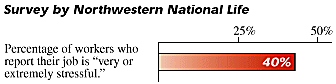
“One-fourth of employees view their jobs as the number one stressor in their lives” -Northwestern National Life


Image source: http://www.investwithalex.com/killing-stress/

Stress and anxiety typically occur when there is a perceived threat and a lack of resources to cope with this threat. Unfortunately, it is often the case that our jobs become a major source of stress and anxiety in our lives, and are a source of stress over which we may have limited control. Job or workplace stress may affect not only our quality of life, but our ability to do well in our careers. Many workers suffer from excessive stress and anxiety as a result of various job-related stressors. The importance of learning to reduce and manage workplace stress cannot be ignored, particularly when we remember that our jobs may affect multiple domains in our lives, including our time, energy, financial security, and possibly even our sense of satisfaction or purpose in life.


What makes a job stressful? Generally, job stress is a result of an interaction between the worker and the working conditions. In other words, certain people will be more stressed by certain jobs. The personality or coping style of the individual may not be a good fit for the demands of a particular type of job. Some people thrive in fast-paced settings, and others are worn down by them. When the job is not a good fit for the person, typically job stress will occur.


stressecard.png

Image source: http://blog.kunnect.com/2014/07/how-to-keep-your-call-center-employees-stress-free/

Though unique worker characteristics often affect a person’s sense of stress in the workplace, for most people, feeling overtaxed, overworked, and minimally supported are universal recipes for increased job stress. Other sources of job stress may be certain workplace conditions that lead to stress, as identified by the CDC’s National Institute for Occupational Safety and Health (see NIOSH job stress article here), including the design of tasks (i.e. workload, breaks, length of workdays, tasks that don’t having meaning or provide a sense of control),management style (i.e. poor communication, not involving employees in decision-making), interpersonal relationships (i.e. lack of support from coworkers or supervisors, conflict with coworkers), work roles (i.e. unclear expectations or too many job responsibilities), career concerns (i.e. job insecurity, no room for growth), and environmental conditions (i.e. potentially dangerous working conditions, including crowding, noise, pollution, ergonomic problems). Universal psychological factors discussed in this APA blog that often lead to job stress include a sense of powerlessness and traumatic events that occur while on the job.


“Three-fourths of employees believe the worker has more on-the-job stress than a generation ago” -Princeton Survey Research Associates


Unfortunately, workplace stress can have a profound impact on our physical and emotional well-being. Research on job stress, as summarized by NIOSH, has found that job stress can lead to increased risk of workers developing cardiovascular disease, musculoskeletal disorders, psychological disorders, workplace injuries, and possibly even increased risk of suicide, cancer, ulcers, and impaired immune function.


Image source: http://www.maggiedinomemd.com/myth-stress-is-stress-its-annoying-but-its-not-harmful/


“According to data from the Bureau of Labor Statistics, workers who must take time off work because of stress, anxiety, or a related disorder will be off the job for about 20 days.” - Bureau of Labor Statistics

Stress not only affects the quality of life of workers, it also compromises their ability to perform optimally (or sometimes even adequately) at their jobs. NIOSH has found that job stress may lead to an increase in absenteeism, tardiness, and intentions by workers to quit their jobs, which negatively impacts the bottom line. Essentially, more burnout from stress leads to more sick days and performing poorly at work. Ultimately, the business suffers as well as the employee. The NIOSH task force also identified characteristics possessed by “healthy” organizations that are low in job stress and high in levels of productivity, which include: recognition of employees for good work performance, opportunities for career development, an organizational culture that values the individual worker, management actions that are consistent with organizational values. When employers or organizations take preventative actions by taking good care of their employees, this often benefits the business in the long run.


Image credit: http://www.startyourbusinessmag.com/free-workshops/

A combination of stress management training and organizational change is typically needed to prevent and reduce job stress and its consequences on workers and workplace productivity. Organizational change directly targets the systemic sources, or environmental “triggers” of job stress, and stress management training helps employees to learn better approaches to coping with stress. Stress management workshops often focus on teaching the worker how to better understand what causes stress, how it affects their well-being, what coping techniques are optimal (such as relaxation exercises or mindfulness practice), and how they can better manage their time (i.e. time management skills). These types of trainings often lead to an immediate reduction in workers’ stress, anxiety, and sleep difficulties. Other stress-reduction programs may focus on other aspects of health and well-being, such as nutrition, exercise, assertiveness, and social skills training. However, without complementary organizational change, stress management training may not have a long-term impact on employees’ well-being.

Ultimately, stress both inside and outside of the workplace can have a significant impact on our ability to thrive. Selecting the most supportive work environment possible, and learning how to effectively manage stress, can potentially tremendously impact not only psychological and physical well-being, but work-performance and success as well.

Are you currently experiencing workplace stress that you would like additional help with?  Contact us here to set up an appointment with one of our therapists, who use evidence based approaches to stress management and reduction.

In the meantime, here are additional job stress-reduction tips from APA’s blog article “Mind/Body Health: Job Stress”:

  • Make the most of workday breaks. Even 10 minutes of "personal time" will refresh your mental outlook. Take a brief walk, chat with a co-worker about a non-job topic or simply sit quietly with your eyes closed and breathe.
  • If you feel angry, walk away. Mentally regroup by counting to 10, then look at the situation again. Walking and other physical activities will also help you work off steam.
  • Set reasonable standards for yourself and others. Don't expect perfection. Talk to your employer about your job description. Your responsibilities and performance criteria may not accurately reflect what you are doing. Working together to make needed changes will not only benefit your emotional and physical health, but also improve the organization's overall productivity.


Are you an employer who would like to learn more about reducing stress in your workplace?  CSAM is proud to offer stress management workshops and trainings to businesses in the San Diego community. If interested in scheduling a stress management workshop for your business, please contact us at 858-354-4077 or click here.


References

Sauter, S., Murphy, L., Colligan, M., Swanson, N., Hurrell, J., Scharf, F., Sinclair, R., Grubb, P., Goldenhar, L., Alterman, T., Johnston, J., Hamilton, A., Tisdale, J. (1999) Stress...at work. Retrieved from http://www.cdc.gov/niosh/docs/99-101/

Miller, L. & Smith, A. Stress in the workplace. Retrieved from http://www.apa.org/helpcenter/workplace-stress.aspx

Weiss, S. & Molitor, N. Mind/body health: Job stress. Retrieved from http://www.apa.org/helpcenter/job-stress.aspx


Tags: anxietyCenter for Stress and Anxiety Managementjob stresswork stressworkplace stressstress managementtime managementstress workshopsstress management workshops

Depression: The Autoimmune Disease Of the Mind

Jill Stoddard

Written by Marnie at http://www.lovebutblog.com/depression-the-autoimmune-disease-of-the-mind/

Depression: The Autoimmune Disease Of the Mind

I’ve seen so many great tributes to Robin Williams in the past 24 hours. I hope he knows how much he affected others in a positive way. That, despite his inner torment, the fact that he made people laugh was able to penetrate the immense sadness he must have felt and give him some sort of peace … even if only for a little while. In fact, peace is something those of us with depression rarely feel.

I hate the word “depression”.  Frankly, it’s depressing. And I hate the commercials about it. You know those Cymbalta commercials? Depression hurts; Cymbalta can help. They show these scenarios of people having trouble getting out of bed, or not even wanting to play ball with their dogs. The truth is, sometimes depression probably does look a lot like that. But sometimes it looks like Robin Williams. Sometimes it looks like comedy, as that is one of the many coping mechanisms people with depression use. Sadly, with people like Robin, it masks something much deeper and darker. Sometimes it looks like a busy schedule. Sometimes it looks like forgetfulness. Sometimes it looks like the person standing up on the podium, accepting an award. As Glennon Melton from Momastery said in a recent post, “People who need help sometimes look a lot like people who don’t need help.”

A friend of mine recently broke my heart with a Facebook status update that said something about how she has an autoimmune disease and that, while she might look happy and healthy on the outside, the pain can be unbearable. It was such a simple statement and yet really had an impact on me, as my mother has had chronic pain her whole life but, to the outside world, she looks fine. In fact, she’s gotten dirty looks and even comments from people for using her Handicapped placard.

Depression is the same way. It’s an autoimmune disease of the mind. For all intents and purposes, many of us who have it look fine on the outside. We might even be somewhat, if not very, blessed by our life circumstances. Abby Heugel put it perfectly on her recent Scary Mommy post, saying, “These are the times that I should reach out, but the thing about depression is that it comes with the sense that you shouldn’t have it to begin with, that it’s a bunch of self-indulgent navel gazing and not an actual illness like those that everyone can see looking in.”

Despite everything good in our lives, the negative thoughts persist in our minds and hearts. Its attack on ourselves feels silly, embarrassing, ridiculous, hateful, awful, confusing, shameful, and a whole bunch of other emotions. When I’m tired, it attacks the most, sensing the weakness within.

Physically, I’d consider myself one tough mother f*cker. In fact, when I was little, I had an unusually high pain tolerance. I went to bed once on a broken wrist that my parents didn’t even know about until they saw me the next morning with an arm that had swollen to twice its size. I once let a man stand on my fingers at a baseball game until they were completely flattened because I didn’t want to say anything. I sprained my ankle a week before my first marathon but ran it anyway, having to stop and get it taped about three times. And yet the feelings of melancholy can crush me like I’m a cancer-ridden 100-year-old.

I hate saying but the truth is I suffer from depression. Some days are great and others are horrible but, you know what, that’s life. I have to learn to accept myself the way I am and not be afraid to talk to others about it. And if you need someone to listen, I’m your gal. In the meantime, when you’re out and about doing your daily deeds, remember that things are not always as they seem. Be kind. Be gentle. Be aware that others might be suffering beyond belief despite that fancy, new car, perfect hair, or insanely clean house. Give meaningful hugs and warm smiles. You never know what those could do for someone who is feeling at the end of his rope.

RIP, Robin Williams. You were loved.


Anxiety: What to Do with Unhelpful Thinking Patterns

Jill Stoddard

Written by Lauren Helm, M.A. 


Our last blog discussed the ways in which anxiety manifests in our minds, bodies, and actions, and how depending on the context, anxiety may be an adaptive or problematic force in our lives.  In excess, the symptoms of anxiety can be overwhelming and interfere with our quality of lives, and thus it is often a worthwhile use of our time to become well-versed in the “language” of anxiety. Namely, how does it appear, and why? Once I understand anxiety, what can I do about it? Our last blog focused primarily on the ways in which our cognitions, or thoughts, may serve to contribute to the increase or reduction of excessive and chronic anxiety. Cognitive distortions, or inaccurate thinking patterns, typically feed anxious feelings. They also may lead to avoidant behaviors, which perpetuate anxious thoughts and feelings. When the cycle of anxious thoughts, feelings, and behaviors occurs outside of our awareness, we can be left feeling baffled and as if our lives have begun to spiral out of our control.  Two evidence-based treatments provide strategies for managing unhelpful thoughts.


Cognitive-behavioral therapy (CBT) identifies how certain types of thoughts or ways of thinking in response to perceived threats actually create more difficulty for us, and potentially lead to anxiety, stress, low mood, and other problems.  Simply put, situations do not cause negative emotions; our perceptions of them do.  . Some of the unhelpful or inaccurate patterns of thinking related to anxiety include catastrophic thinkingprobability overestimation (overestimating the likelihood of a negative outcome), worry or rumination (i.e. brooding), filtering out the positive and only seeing the negative, jumping to conclusions, mind reading (thinking you know another person’s intent for acting in a certain way, when this may not be true), personalizing, and black and white thinking. CBT therapists help individuals to alleviate the consuming nature of anxiety by using various strategies. However, the various approaches that are used to deal with these types of “inaccurate” thinking patterns have historically served a common purpose: correct the “thinking errors” that create anxiety. Over time, CBT has evolved and has placed more emphasis on helping people to generate more flexible, adaptive thoughts and responses to their thoughts. Instead of merely trying to replace one problematic thought with a more helpful one, CBT can help an individual to generate more balanced and healthy thoughts, and more easily identify and non-reactively respond to problematic, anxiety-provoking thoughts. In other words, if you notice that you are thinking in inaccurate ways, it is likely best to recognize that it may not be helpful to act on this inaccurate thought, and better to generate a new, alternative way of thinking about the situation that helps you to successfully reach your goals. Instead of trying “not to think” a certain way (for example, not trying to suppress or shut out a problematic thought), the emphasis is on being able to create more thoughts that are based on a more balanced review of available information and are informed by your goals in a particular situation. Rigidity, or getting stuck in one narrow way of thinking, is usually what contributes to us further being consumed by anxious thinking and behaving. Thus, increasing cognitive and behavioral flexibility (working towards developing a wide range of thinking and responding) is encouraged.


Cognitive restructuring is a CBT intervention that helps individuals get “unstuck” from the “mind traps” that thinking errors create. Generally, what is required is (1) an awareness of or monitoring of thoughts regarding a particular situation, (2) challenging the thought (i.e. “Is this a realistic thought?” “Is it helpful?”), (3) exploring the evidence for or against the thought (i.e. What are the facts?), (4) identifying other possible alternative explanations and putting the thought in perspective, and (5) generating a balanced, more helpful thought from which to act on.


Acceptance and Commitment Therapy (ACT) guides individuals in becoming aware of not only their thoughts, but also their enmeshment, or fusion, with these thoughts. Cognitive fusionrefers to how much we believe our thoughts, and thereby grant them power and “reality” in our lives. We often forget that every thought filters how we see the world, and dramatically impacts our direct experiencing of life. Regardless of how “true” our thoughts may be, they are just thoughts. Thus, ACT therapists help individuals practice cognitive defusion, reducing of the entanglement with the  thoughts. In other words, we learn how to become less attached to and controlled by our thoughts, because we learn how to see them for what they really are. We learn how to give them less power over us, and take back the power of “choosing” which thoughts we want to listen to (for example, being guided by a thought that supports us in acting in valued ways, as opposed to avoidant ways).


Additionally, ACT asserts that we have limited control over which thoughts or emotions we experience. The problem is less in the content of our thinking or feeling, and more in what we dowith these thoughts or emotions, or how we relate to them. In other words, we can change our relationship with our thoughts so that we can focus our energy on what is truly worthy and important to us, instead of using most of our energy on trying to simply manage or reduce unpleasant thinking.


In sum, awareness of our thinking patterns is often the first step, and changing how we approach our thoughts is the next step along the way of healing and wellness.

These two approaches may resonate differently for different people. Both CBT and ACT are evidence-based treatments for anxiety, and can help those who struggle with the reign of anxiety get back into living full and meaningful lives.

If you are interested in having assistance with unhelpful thinking patterns, our CSAM therapists are trained in both CBT and ACT. If you'd like to speak with a professional at the Center for Stress and Anxiety Management for help with anxiety, please click here.

Follow us! Subscribe to the CSAM RSS feed, and follow us on Facebook or Twitter (@CSAMSanDiego)


Resources

Cognitive Distortions and Restructuring Handout:

http://www.reconnect.salvos.org.au/common%20mindtraps.pdf


References

Barlow, D. H. (2004). Anxiety and its disorders: The nature and treatment of anxiety and panic. Guilford press.

Behar, E., DiMarco, I. D., Hekler, E. B., Mohlman, J., & Staples, A. M. (2009). Current theoretical models of generalized anxiety disorder (GAD): Conceptual review and treatment implications. Journal of Anxiety Disorders23(8), 1011-1023.

Beck, A. T., Emery, G., & Greenberg, R. L. (2005). Anxiety disorders and phobias: A cognitive perspective. Basic Books.

Hayes, S. C., & Smith, S. (2005). Get out of your mind and into your life: The new acceptance and commitment therapy. New Harbinger Publications.

Sibrava, N. J., & Borkovec, T. D. (2006). The cognitive avoidance theory of worry. Worry and its psychological disorders: Theory, assessment and treatment, 239-256.

Tags: anxietycognitive behavioral thearpyanxiety therapy san diegofearacceptance and commitment therapyworryACTstress and anxiety in san diegopsychologist in san diego,Cognitive Behavioral TherapyCBT San DiegoCenter for Stress and Anxiety Managementcognitive distortionscognitive restructuring

That Which Fuels the Fire of Anxiety: Unhelpful Thinking Patterns

Jill Stoddard

By Lauren Helm, M.A.


We’ve all felt it at some point in our lives (likely many times over, in fact), though perhaps it manifested in different ways. You may have noticed the rapidly increasing pitter-patter of your heart, the fast, constricted breaths, the growing tension in your shoulders and neck, clammy hands, or maybe a funny feeling in the pit of your stomach. The experience of anxiety is unpleasant, to say the least, and as it builds, it certainly has a way of getting our attention.

Why do we experience these uncomfortable sensations that we call anxiety? From an evolutionary perspective, fear and anxiety (two related but slightly different emotions) have a function: they keep us alive. More specifically, fear and anxiety are emotions that occur in response to a perceived threat. When we believe that something may harm us or is dangerous, we feel these emotions and they motivate us to protect ourselves from the danger, typically either by avoiding or escaping the threat. Without fear or anxiety, we may not react to truly dangerous situations in an adaptive way, and thus not survive as a species. Imagine walking along and crossing paths with a Grizzly Bear. Would it be helpful to feel no fear, and to run up and hug it? Obviously for most of us, this would not end well! Our emotions give us invaluable information about the environment and about what actions we should take, based on how we feel.

As incredible as our brains are, they also are prone to errors. We are not always able to accurately assess the true amount of danger (or safety) that may be present in our surroundings. Sometimes this means that we may miss a true threat that was present and suffer the consequences. However, in our modern day society, more often than not we experience the opposite – we overestimate the true amount of threat and thereby experience excessive anxiety as a result.

The problem with excessive anxiety is that it can negatively impact the quality of our lives in multiple ways. Prolonged, pervasive anxiety has an impact on our physical well-being, in addition to our psychological well-being. Chronic stress and anxiety can lead to a deterioration of optimal physical functioning, preventing your immune system, digestive system, and heart from performing the best that they can. Chronic anxiety may also interfere with your ability to sleep, eat, and generally function as you’d like to in life.


How does anxiety become problematic? Cognitive-behavioral therapists tend to understand most mood and anxiety disorders using the cognitive triad, which breaks down our experiences into thoughts, behaviors, and feelings. In brief, anxiety is both developed and maintained by an interplay between certain unhelpful thinking and behavioral patterns. For example, anxiety may be perpetuated by certain ways of thinking. A low threshold for perceiving threat (i.e. situations very easily feel threatening) and an attentional bias to threat (i.e. focusing and narrowing your attention on potential dangers that surround you) can contribute to feeling anxiety. In other words, if we easily feel threatened and continue to be on the lookout for threat, we will likely frequently feel anxious. Another thinking pattern that feeds anxiety is called catastrophic thinking. Catastrophic thinking occurs when our mind jumps to imagining worst-case scenarios when we are uncertain about an outcome.  For example, our mind may imagine that our loved one has been involved in a car accident because they still haven’t returned home 30 minutes after they said that they would. Furthermore, probability overestimation occurs  along with catastrophic thinking – this is when we overestimate how likely it is that the “worst-case scenario” has or will occur. When we are feeling anxious, we often feel very certain that the worst-case scenario will occur  even though realistically-speaking, the chances are much lower (or are little to none) that what we fear will actually happen. Unfortunately, we are unlikely to recognize this while we are in the midst of severe anxiety – instead, we may engage in worry orrumination (i.e. brooding) about the many possible negative “what if” scenarios, and use extensive cognitive energy to plan for or prevent potential future threats from occurring. In moderation, worrying and planning for future threats can be helpful, but when it begins to take excessive time and energy (which is quite exhausting), it becomes maladaptive and interferes with your ability to function optimally. More often than not, the cost of worrying exceeds the benefits (it may become a waste of energy) and actually feeds the anxiety that it is intending to placate.


These are just a few ways that our patterns of thinking can create and maintain anxiety. In our next blog, we will talk more about unhelpful or inaccurate thinking patterns (also called cognitive distortions) and some suggestions for creating more adaptive ways of thinking and behaving in response to anxiety.


If you'd like to speak with a professional at the Center for Stress and Anxiety Management for help with anxiety, please click here.

Follow us! Subscribe to the CSAM RSS feed, and follow us on Facebook or Twitter (@CSAMSanDiego)


Resources

http://www.webmd.com/balance/guide/how-worrying-affects-your-body

http://www.apa.org/divisions/div12/rev_est/cbt_gad.html


References

Barlow, D. H. (2004). Anxiety and its disorders: The nature and treatment of anxiety and panic. Guilford press.

Behar, E., DiMarco, I. D., Hekler, E. B., Mohlman, J., & Staples, A. M. (2009). Current theoretical models of generalized anxiety disorder (GAD): Conceptual review and treatment implications. Journal of Anxiety Disorders23(8), 1011-1023.

Beck, A. T., Emery, G., & Greenberg, R. L. (2005). Anxiety disorders and phobias: A cognitive perspective. Basic Books.

Sibrava, N. J., & Borkovec, T. D. (2006). The cognitive avoidance theory of worry. Worry and its psychological disorders: Theory, assessment and treatment, 239-256.

Tags: anxietycognitive behavioral thearpyanxiety therapy san diegoanxiety therapyworryCognitive Behavioral TherapyCenter for Stress and Anxiety Managementcognitive distortionsemotion regulationanxiety disordersunhelpful thinking